The Bible and The Urantia Book
84 episodes, side by side, from creation to the early church
Much of The Urantia Book retells events the Bible also tells: Adam and Eve, the flood, Melchizedek and Abraham, Moses, and above all the life of Jesus. Sometimes the two accounts match closely. Sometimes the Urantia Book tells a different story, and sometimes it says outright that the Bible’s version is a later legend. This page walks the Bible’s story in order and sets the two side by side, each in its own words, with a short quotation and the verses and paragraphs to read in full.
The verdicts describe how the two accounts relate, not which one is right.
Genesis 1–2Creation
Did God create the heavens and the earth?
The two agreeBoth books make one God the creator of everything, though the Urantia Book says he creates through Creator Sons and other agents over vast spans of time.Universal FatherCreation
Was the world made in six days?
They differThe BibleGod made the world in six days, with light on the first day and the sun, moon and stars on the fourth, and rested on the seventh day, which he blessed.
“And on the seventh day God ended his work which he had made; and he rested on the seventh day from all his work which he had made.” Gen 2:2
The Urantia BookThe six days come from the tradition that Adam and Eve spent six days surveying the Garden, and the story was written down long after; the sudden appearance of the sun and moon may echo a time when a dense space cloud hid them. Urantia's own history begins about a billion years ago.
“The legend of the making of the world in six days was an afterthought, in fact, more than thirty thousand years afterwards.” 74:8.2
The Bible gives a six-day creation; the Urantia Book calls it a legend built from Adam's six-day survey of the Garden, on a planet about a billion years old.CreationWeekSabbathGenesis, Book of
Was man formed from the dust of the ground?
They differThe BibleGod formed man from the dust of the ground and breathed into his nostrils the breath of life, and man became a living soul.
“And the LORD God formed man of the dust of the ground, and breathed into his nostrils the breath of life” Gen 2:7
The Urantia BookHumans evolved from earlier animal life; the first two human beings, the twins Andon and Fonta, were born about a million years ago and are the parents of all mankind. The story of creation from clay was a widespread tradition, though the Urantia Book agrees that the Spirit of God imparts the 'breath of life'.
“The belief in man’s having been created from clay was well-nigh universal in the Eastern Hemisphere” 74:8.4
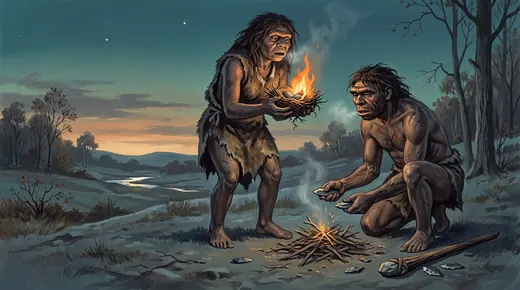 The Bible has God shape the first man directly from the ground; the Urantia Book has humanity evolve, with Andon and Fonta as the first humans, while still crediting the Spirit with the gift of life.Andon and FontaEvolutionCreationism
Genesis 2–3Adam and Eve
Were Adam and Eve the first humans?
They differThe BibleAdam is the man God formed and put in the garden, and Eve is named the mother of all living.
“And Adam called his wife’s name Eve; because she was the mother of all living.” Gen 3:20
The Urantia BookAdam and Eve were Material Sons from Jerusem, about eight feet tall, who arrived 37,848 years before 1934 to uplift a world already peopled for nearly a million years; the idea that Adam was the first man grew from tracing Abraham's lineage back to him.
“the Jews assumed that Adam was the first of all mankind” 74:8.10
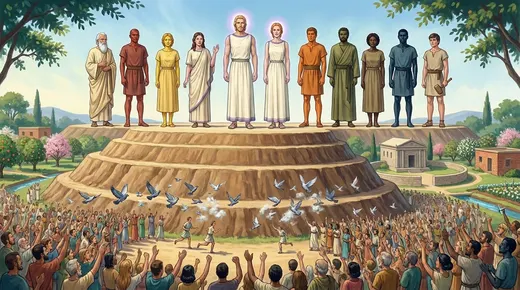 The Bible presents Adam and Eve as the first humans; the Urantia Book makes them late arrivals from another world sent to a long-inhabited planet.AdamEveAdamic Sons
Where was the Garden of Eden?
Same event, different detailsThe BibleGod planted a garden eastward in Eden, watered by a mist and by a river that parted into four heads, among them the Hiddekel and the Euphrates.
“And a river went out of Eden to water the garden; and from thence it was parted, and became into four heads.” Gen 2:10
Read: Gen 2:6; Gen 2:8; Gen 2:10-14
The Urantia BookEden was a real garden on a narrow peninsula jutting west from the eastern Mediterranean shore, watered by nightly irrigation mist and a river fed by four tributaries; it later sank beneath the sea, and the four heads were confused with the rivers of the second garden in Mesopotamia.
“these are the “four heads” of the river which “went out of Eden,” and which later became confused with the branches of the rivers surrounding the second garden” 73:3.4
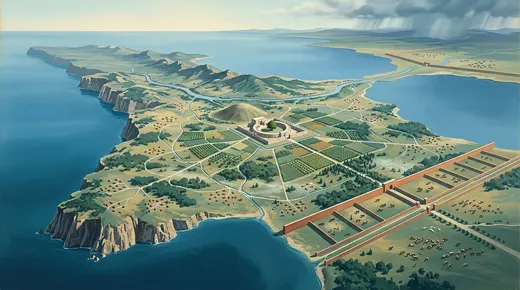 Both describe a real watered garden with a four-headed river and even the mist; the Urantia Book places it on a now-sunken Mediterranean peninsula rather than in Mesopotamia.Garden of EdenSecond garden
Was Eve made from Adam's rib?
They differThe BibleGod put Adam into a deep sleep, took one of his ribs, and made the woman from it.
“And the rib, which the LORD God had taken from man, made he a woman, and brought her unto the man.” Gen 2:22
Read: Gen 2:21-23
The Urantia BookEve came with Adam from Jerusem and both were rematerialized together; the rib story is a confused memory of Adam's arrival mixed with the celestial surgery performed for the Planetary Prince's staff 450,000 years earlier.
“The story of creating Eve out of Adam’s rib is a confused condensation of the Adamic arrival and the celestial surgery” 74:8.3
The Bible makes Eve from Adam's body; the Urantia Book says they arrived as a pair and calls the rib story a confusion of two older events.EveAdam
Were Adam and Eve naked?
They differThe BibleThey were naked and unashamed until they ate the fruit; then they sewed fig leaves into aprons, and God later made them coats of skins.
“And they were both naked, the man and his wife, and were not ashamed.” Gen 2:25
The Urantia BookThey wore clothing like the people around them, very little by day and wraps at night; the clothes hid their bodies' shimmer of light, so only the glow around their heads showed, the origin of the halo.
“they always wore clothing in conformity with the custom of their associates” 74:6.5
Read: 74:6.5
The Bible has the pair naked before the fall; the Urantia Book says they always wore clothing in the local custom.AdamEveHalo
Was there a tree of life?
The two agreeThe BibleGod set the tree of life in the midst of the garden; eating of it would let a man live for ever.
“the tree of life also in the midst of the garden” Gen 2:9
The Urantia BookThe tree of life was a real shrub sent from Edentia, planted in the circular courtyard of the Father's temple at the center of the Garden; its fruit sustained the bodies of Adam and Eve, though it did nothing for ordinary mortals.
“the “tree of life” was not a myth; it was real and for a long time was present on Urantia” 73:6.3
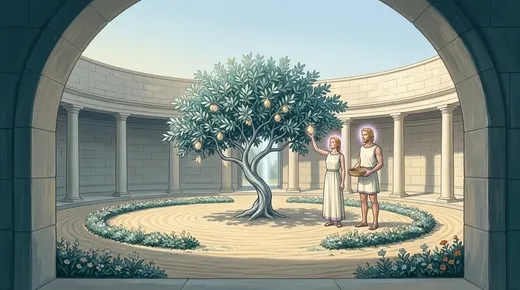 Both place a real life-prolonging tree at the center of the garden; the Urantia Book adds that it came from Edentia and worked only for Adam and Eve and certain others.Tree of lifeGarden of Eden
The tree of the knowledge of good and evil
Same event, different detailsThe BibleGod forbade Adam to eat from the tree of the knowledge of good and evil, warning that in the day he ate of it he would surely die.
“But of the tree of the knowledge of good and evil, thou shalt not eat of it: for in the day that thou eatest thereof thou shalt surely die.” Gen 2:17
The Urantia BookThe tree of knowledge may be a figure of speech; the real warning, given each time they ate from the tree of life, was not to combine good and evil by departing from the divine plan, or they would become mortal and die.
“In the day that you commingle good and evil, you shall surely become as the mortals of the realm; you shall surely die.” 75:4.4
Both have a warning that disobedience would bring death; the Urantia Book treats the forbidden tree as a figure of speech for mixing good and evil rather than a literal fruit.AdamEveDefault
The serpent and the fall
They differThe BibleThe serpent persuaded Eve that she would not die if she ate the fruit; she ate, and gave some to Adam, who ate too.
“And the serpent said unto the woman, Ye shall not surely die:” Gen 3:4
The Urantia BookCaligastia worked through the Nodite leader Serapatatia; Eve met secretly with Cano, who assured her she would not die but live anew in their child, and she conceived by him; Adam, not beguiled, then deliberately did the same so as to share her fate. The Urantia Book says this was no fall of the human race.
“she should surely not die but rather live anew in the person of their offspring” 75:4.5
The Bible's tempter is a talking serpent and the sin is eating fruit; in the Urantia Book the tempter is a sincere Nodite leader, the default is Eve's union with Cano, and there was no fall of man.EveCanoSerapatatiaCaligastiaDefault
"Where art thou?" The voice in the Garden
Same event, different detailsThe BibleAdam and Eve heard the voice of the Lord God walking in the garden in the cool of the day, hid among the trees, and God called to Adam, asking where he was.
“And they heard the voice of the LORD God walking in the garden in the cool of the day” Gen 3:8
Read: Gen 3:8-9
The Urantia BookThe voice that reproved them that night in the moonlit Garden was Solonia, a seraph, and her counsel with the pair is what the record remembers as the Lord God calling to Adam and Eve; later generations attributed such things directly to God.
“This conference appears in your records as “the Lord God calling to Adam and Eve in the Garden and asking, ‘Where are you?’”” 75:4.8
Both have a voice in the Garden confronting Adam and Eve after their misstep; the Urantia Book says it was a seraph, not God in person.SoloniaVoices of the GardenAdamEve
Leaving Eden
Same event, different detailsThe BibleGod cursed the ground so that Adam would eat bread by the sweat of his face, then drove the pair out of Eden and set cherubim and a flaming sword to guard the way to the tree of life.
“So he drove out the man; and he placed at the east of the garden of Eden Cherubims, and a flaming sword which turned every way, to keep the way of the tree of life.” Gen 3:24
Read: Gen 3:17-19; Gen 3:23-24
The Urantia BookWith an army of Nodites marching on the Garden, Adam chose to leave rather than fight, leading about twelve hundred followers out; they could not take the tree of life with them, lost access to its fruit, and in the second garden had to work the soil 'in the sweat of their faces'.
“Adam had no liking for war and accordingly elected to leave the first garden to the Nodites unopposed.” 75:6.2
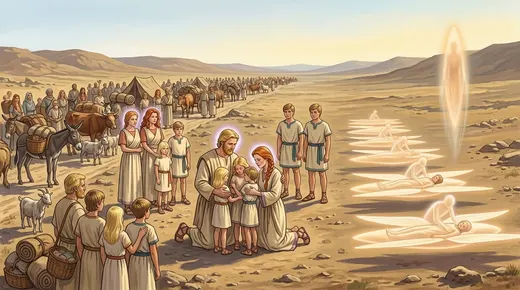 Both have the pair leave Eden, lose the tree of life and take up hard toil; the Bible says God drove them out, while the Urantia Book says Adam left by choice to avoid war.AdamEveNoditesSecond garden
Genesis 4–11Cain to Babel
Cain, Abel, and Cain's wife
Same event, different detailsThe BibleEve bore Cain, a tiller of the ground, and Abel, a keeper of sheep; God favoured Abel's offering over Cain's, Cain killed Abel, received a mark so none would slay him, went to the land of Nod east of Eden, and there had a son, Enoch, by his wife.
“dwelt in the land of Nod, on the east of Eden” Gen 4:16
Read: Gen 4:1-5; Gen 4:8; Gen 4:15-17
The Urantia BookCain was Eve's son by Cano, Abel the son of Adam; Abel the herder taunted Cain the farmer over the priests' preference for animal offerings until Cain killed him. Cain, fearing death, sought God and was indwelt by an Adjuster, then went to the land of Nod, an existing people, and married Remona, whose first son was Enoch.
“neglected to remove the telltale reference to Cain’s emigration to the “land of Nod,” where he took himself a wife” 74:8.8
Read: 75:5.3 76:2.1 76:2.2 76:2.4 76:2.5 76:2.8 76:2.9 74:8.8
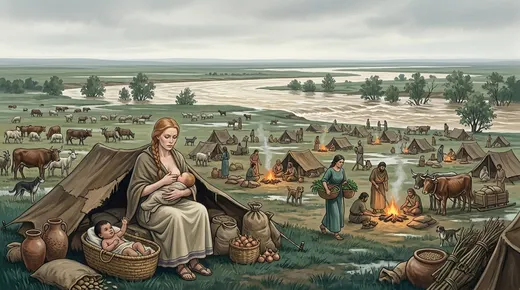 The outline matches, down to the farmer and herder, the offerings, the land of Nod and the son Enoch; the Urantia Book makes Cano Cain's father and says Cain's wife came from an older people already living outside Eden.CainAbelNod (land of)RemonaEnochCano
Seth and the beginning of worship
The two agreeThe BibleAdam was a hundred and thirty years old when Seth was born; Seth's son was Enos, and then men began to call upon the name of the Lord.
“And Adam lived an hundred and thirty years, and begat a son in his own likeness, after his image; and called his name Seth:” Gen 5:3
Read: Gen 4:25-26; Gen 5:3
The Urantia BookSeth, born 129 years after Adam's arrival, was the eldest surviving son born in the second garden and founded its priesthood; his son Enos founded the new order of worship. By then Adam and Eve already had many other children.
“He was born one hundred and twenty-nine years after Adam’s arrival on Urantia.” 76:3.4
Both date Seth's birth to about 130 years into Adam's life and credit Seth's line, through Enos, with a new start in worship; the Urantia Book adds that Adam and Eve had more than sixty earlier children.SethSethitesAdam
Did the patriarchs live nine hundred years?
They differThe BibleAdam lived 930 years, and Methuselah 969, the longest of the patriarchs before the flood.
“And all the days that Adam lived were nine hundred and thirty years: and he died.” Gen 5:5
The Urantia BookThe very long lives come from confusing the twenty-eight-day month with the year; a life of over nine hundred such 'years' is under seventy real years. Adam himself lived 530 years and Eve died nineteen years before him.
“There are records of a man who lived over nine hundred “years.” This period represents not quite seventy years” 77:2.11
The Bible gives the patriarchs lifespans of nearly a thousand years; the Urantia Book says these figures count months as years, though it does give Adam an unusually long 530 years.Adam
The sons of God and the daughters of men
Same event, different detailsThe BibleThe sons of God took wives from the daughters of men; there were giants in those days, and their children became the mighty men of old, men of renown.
“the same became mighty men which were of old, men of renown” Gen 6:4
The Urantia BookThe Nephilim were the Nodites, descendants of the Planetary Prince's staff, whom ordinary mortals took for sons of the gods and whose stature tradition magnified; the story later merged with the Adamites (the Sons of God) marrying Nodite women.
“While hardly “sons of the gods,” the staff and their early descendants were so regarded by the evolutionary mortals of those distant days” 77:2.3
Both describe a mingling of a superior lineage with ordinary women that produced famous men; the Urantia Book identifies them as the Nodites and Adamites rather than divine beings.NephilimNoditesAdamites
Noah and the flood
They differThe BibleGod told Noah to build an ark and sent a flood that covered all the high hills and destroyed every living thing on the ground; only Noah and those with him survived, the ark came to rest on the mountains of Ararat, and Noah afterwards planted a vineyard.
“And the waters prevailed exceedingly upon the earth; and all the high hills, that were under the whole heaven, were covered.” Gen 7:19
Read: Gen 6:14; Gen 6:17; Gen 7:19; Gen 7:23; Gen 8:4; Gen 9:20
The Urantia BookThere has never been a universal flood since life began on Urantia; the Bible story was written by Hebrew priests in Babylonian exile. But Noah really lived, a wine maker of Aram near Erech who urged people to build boat-like houses, and he and his family survived a great river flood in their houseboat; Ararat came in from the Babylonian flood story.
“There has never been a universal flood since life was established on Urantia.” 78:7.4
The Bible tells of a worldwide flood; the Urantia Book denies one ever happened, while agreeing that a man named Noah, a vine-grower, saved his family from a flood in a boat.Noah (wine maker of Aram)Ark of NoahFloodsMount Ararat
The Tower of Babel
Same event, different detailsThe BibleWhen the whole earth had one language, people began a city and a tower reaching to heaven to make a name for themselves; God confounded their language and scattered them, and the city was called Babel.
“let us build us a city and a tower, whose top may reach unto heaven; and let us make us a name, lest we be scattered abroad upon the face of the whole earth” Gen 11:4
Read: Gen 11:1; Gen 11:4; Gen 11:7-9
The Urantia BookLong before Adam, the Nodites began a great temple tower designed by Bablot as a monument to their race; after four and a half years they quarrelled over its purpose, fought until nearly wiped out, and dispersed. The city, Bablot, later became known as Babel.
“This location later became known as Bablod and eventually as Babel.” 77:3.3
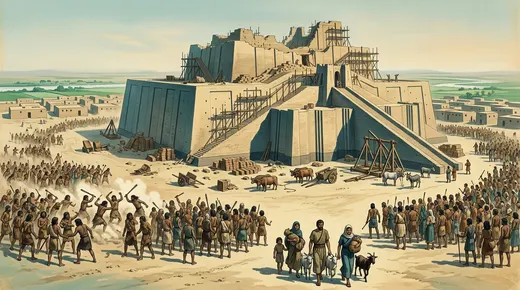 Both have a proud tower left unfinished and its builders scattered; the Urantia Book dates it before Adam, credits Nodite builders, and puts the breakup down to a dispute and civil war rather than a divine confusion of languages.Tower of BabelBablot (architect)Nodites
Genesis 12–50Abraham to Joseph
Why did Abraham say Sarah was his sister?
The two agreeThe BibleGoing down to Egypt in a famine, Abram feared the Egyptians would kill him to take his beautiful wife, so he had Sarai say she was his sister; he did the same later at Gerar, where Abimelech took her.
“they will kill me, but they will save thee alive” Gen 12:12
Read: Gen 12:10-20; Gen 20:1-18
The Urantia BookAbraham did withhold his identity at Gerar, so that Abimelech took his wife. Ever since he overheard a plot to murder him for Sarah, he lived in dread of it, which explains why he acted like a coward on three occasions.
“all his life he feared that someone would kill him secretly in order to get Sarah” 93:9.3
Both tell of Abraham disowning his wife out of fear for his life; the Urantia Book adds where the fear came from.Abraham (Old Testament)SarahAbimelechEgypt
Melchizedek meets Abram after the battle
Same event, different detailsThe BibleAfter Abram defeated the kings who had carried off Lot, Melchizedek, king of Salem and priest of the most high God, brought out bread and wine and blessed him, and Abram gave him tithes of all.
“And Melchizedek king of Salem brought forth bread and wine: and he was the priest of the most high God.” Gen 14:18
Read: Gen 14:14-20
The Urantia BookMelchizedek opposed the war and set out to talk Abraham out of it, but met him only as he came back victorious; Abraham insisted on giving a tenth of the spoils to Salem. The scribes in exile destroyed the other records of Melchizedek and kept only this meeting, because it honoured Abraham.
“went forth to dissuade him but only caught up with his former disciple as he returned victorious from the battle” 93:5.13
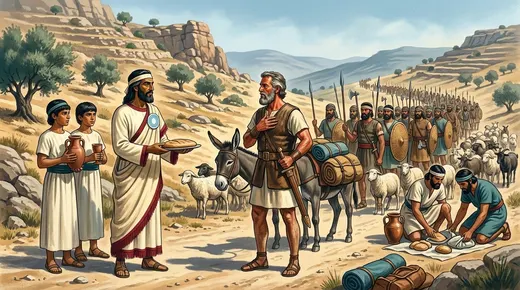 Both have the meeting, the bread and wine and the tithe; the Urantia Book adds that Melchizedek disapproved of the war and that this is the one Melchizedek story the scribes kept.Machiventa MelchizedekAbramSiddimTithingSalemLot
The covenant with Abraham
Same event, different detailsThe BibleThe word of the LORD came to Abram in a vision and told him to count the stars, for so would his descendants be; Abram believed, and it was counted to him for righteousness. Later God renamed him Abraham and made circumcision the sign of the covenant.
“Look now toward heaven, and tell the stars, if thou be able to number them: and he said unto him, So shall thy seed be.” Gen 15:5
Read: Gen 15:1-6; Gen 17:5-10
The Urantia BookMelchizedek made the covenant with Abraham at Salem in almost the same words; Abraham later had it written down, changed his name and accepted circumcision to seal it. The Urantia Book says the Old Testament's conversations between Abraham and God were really conferences with Melchizedek.
“What the Old Testament records describe as conversations between Abraham and God were in reality conferences between Abraham and Melchizedek.” 93:9.7
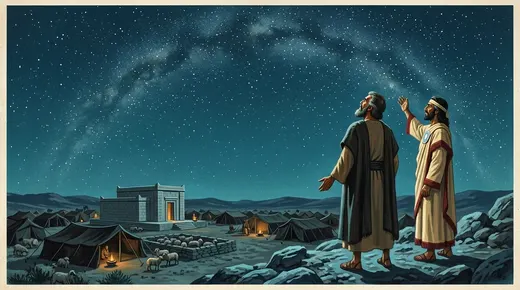 The promise of the stars and faith counted as righteousness match nearly word for word; the books differ on who spoke, God himself or Melchizedek.CovenantsAbraham (Old Testament)Machiventa MelchizedekCircumcision
The visitors at Mamre and the fall of Sodom
They differThe BibleThree men appeared to Abraham at his tent by the plains of Mamre; afterwards the LORD rained brimstone and fire from heaven on Sodom and Gomorrah for their wickedness.
“Then the LORD rained upon Sodom and upon Gomorrah brimstone and fire from the LORD out of heaven;” Gen 19:24
Read: Gen 18:1-2; Gen 19:24-25
The Urantia BookThree celestial beings really did appear to Abraham on the plains of Mamre, but the stories about Sodom and Gomorrah attached to that visit were made up later; the cities' destruction was natural.
“This was an appearance of fact, notwithstanding its association with the subsequently fabricated narratives relating to the natural destruction of Sodom and Gomorrah.” 93:6.7
Read: 93:6.7
The Urantia Book accepts the visit at Mamre but calls the story of Sodom's fiery judgment a later fabrication built around a natural disaster.MamreSodomGomorrahLot
- The Bible
God promised a son to Abraham at a hundred and Sarah at ninety, and Isaac was born to them in their old age.
“Shall a child be born unto him that is an hundred years old? and shall Sarah, that is ninety years old, bear?” Gen 17:17
Read: Gen 17:15-19; Gen 21:1-5
The Urantia BookIsaac was born as Melchizedek had promised, but Abraham was not as old as the records say and Sarah was much younger; the ages were changed when the records were compiled in Babylon.
“These ages were deliberately altered in order to provide for the subsequent alleged miraculous birth of Isaac.” 93:9.8
Both have Isaac born as promised; the Urantia Book says his parents' great ages were added later to make the birth a miracle.Isaac (Old Testament)SarahAbraham (Old Testament)
The sacrifice of Isaac
Same event, different detailsThe BibleGod tested Abraham by telling him to offer Isaac as a burnt offering in the land of Moriah, then stopped his hand at the last moment and provided a ram in Isaac's place.
“Lay not thine hand upon the lad, neither do thou any thing unto him” Gen 22:12
Read: Gen 22:1-13
The Urantia BookThe Urantia Book sets the story against its time: fathers under great stress long sacrificed their first-born sons, many peoples have a similar tradition, and Abraham himself took up the Philistine practice of sacrificing first-born sons late in life.
“It was long a prevalent practice for fathers, at times of great emotional stress, to sacrifice their first-born sons.” 89:6.8
The Bible presents a divine test that ends with a ram; the Urantia Book does not retell the scene but explains it as an echo of the widespread custom of first-born sacrifice.Isaac (Old Testament)Human sacrificeSacrificeAbraham (Old Testament)
Joseph in Egypt
Same event, different detailsThe BibleJoseph, his father's favourite and a dreamer, was sold by his brothers into Egypt; he rose by interpreting Pharaoh's dreams and was set over all the land.
“And Pharaoh said unto Joseph, See, I have set thee over all the land of Egypt.” Gen 41:41
Read: Gen 37:3-28; Gen 41:39-43
The Urantia BookJoseph's brothers called him a dreamer because he firmly believed the Melchizedek traditions. His honour in Egypt came chiefly from the memory of Abraham; offered command of the army, he chose to serve as a civil administrator. The Urantia Book says the Joseph stories are far more reliable than those about Abraham.
“he elected to serve as a civil administrator, believing that he could thus better labor for the advancement of the kingdom of heaven” 93:9.5
Both make Joseph a dreamer raised to high civil office in Egypt; the Urantia Book credits his rise mainly to Abraham's reputation and adds the military command he refused.Joseph (Old Testament)Egypt
Exodus – MalachiMoses to the prophets
How Israel left Egypt
They differThe BibleAfter ten plagues, the last killing Egypt's first-born, Pharaoh let Israel go; when he gave chase, God parted the sea for Israel and drowned Pharaoh's army in it.
“And the waters returned, and covered the chariots, and the horsemen, and all the host of Pharaoh that came into the sea after them; there remained not so much as one of them.” Ex 14:28
Read: Ex 12:29-31; Ex 14:21-28
The Urantia BookMoses first negotiated a treaty to leave peacefully, which Pharaoh repudiated. Within a year, while Egypt's army was fighting a Libyan attack and a Greek naval invasion, he led a carefully planned night flight, and the small Egyptian force that pursued them fell before the fugitives' defence.
“this intrepid organizer led his compatriots out of Egypt in a spectacular night flight” 96:3.5
The Urantia Book tells the escape as a planned night flight timed to Egypt's wars, with no plagues or parted sea, and the pursuers beaten in a fight rather than drowned.MosesExodusEgypt
Fire and smoke on Mount Sinai
Same event, different detailsThe BibleWhen the LORD came down on Mount Sinai, the mountain smoked like a furnace and quaked, with thunder, lightning and fire.
“the smoke thereof ascended as the smoke of a furnace, and the whole mount quaked greatly.” Ex 19:18
Read: Ex 19:16-20
The Urantia BookHoreb, the Sinai volcano, erupted violently in the third week of the Hebrews' stay at its foot. The eruption helped Moses hold his people together and teach them that their God was a devouring fire.
“had it not been for the violent eruption of Horeb during the third week of their worshipful sojourn at its base” 96:4.5
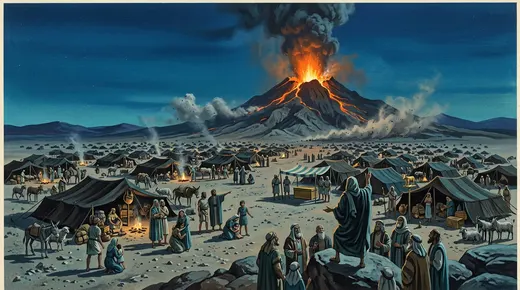 The scene matches closely, and the Urantia Book quotes it; the Urantia Book puts the fire and quaking down to a volcanic eruption rather than God descending on the mountain.Mount HorebMount SinaiMosesYahweh
The Ten Commandments
Same event, different detailsThe BibleGod spoke the ten commandments from Sinai and gave Moses two tables of stone written with his own finger. Exodus grounds the Sabbath in the six days of creation; Deuteronomy grounds it in the deliverance from Egypt.
“two tables of testimony, tables of stone, written with the finger of God.” Ex 31:18
Read: Ex 20:1-17; Ex 31:18; Dt 5:12-15
The Urantia BookMoses proclaimed the ten commandments in the name of Yahweh, the god of Horeb. Jesus taught that Israel had an older set of ten commandments before Sinai, and that the two recorded versions show the reason for the Sabbath being changed from the deliverance out of Egypt to the creation.
“amidst the thunders and lightnings of Sinai, Moses gave them the new ten commandments” 142:3.21
Both have ten commandments given at Sinai; the Urantia Book treats them as Moses' proclamation, replacing an older code, rather than words written by God on stone.Ten CommandmentsMosesMount SinaiSabbath
Who was Yahweh?
They differThe BibleThe LORD made himself known to Israel as a jealous God who visits iniquity on the children, a man of war, and also merciful, gracious and longsuffering.
“for I the LORD thy God am a jealous God” Ex 20:5
The Urantia BookYahweh began as the nature god of the Sinai volcano, worshiped by the southern desert tribes. Moses taught his higher idea of God under that old name, and over the centuries Israel's teachers turned the jealous desert god into the loving Father of all, without changing the name.
“the gradual but continuous transformation of the barbaric concept of the savage demon Yahweh, the jealous and cruel spirit god of the fulminating Sinai volcano” 97:10.8
The Bible presents one God revealing himself to Israel; the Urantia Book describes a human idea of God that grew from a tribal volcano deity into the Universal Father.YahwehLord God of IsraelMount HorebMoses
Did Israel conquer Canaan?
They differThe BibleJoshua took the whole land, as the LORD had told Moses, and divided it among the tribes of Israel; Judges adds that Israel did not drive all the Canaanites out and married among them.
“So Joshua took the whole land, according to all that the LORD said unto Moses” Jos 11:23
The Urantia BookThere never were twelve tribes; only three or four settled in Palestine. The Hebrew nation grew out of the union of the Israelites and the Canaanites, and the Hebrews never drove the Canaanites out, whatever the priests' record says.
“The Hebrews never drove the Canaanites out of Palestine, notwithstanding that the priests' record of these things unhesitatingly declared that they did.” 97:9.1
Read: 97:9.1
The Urantia Book rejects the complete conquest and the twelve tribes, siding with the verse in Judges, which it quotes, about Israel living among and marrying the Canaanites.CanaanitesJoshua (Old Testament)Israelites
How David became king
They differThe BibleGod sent Samuel to anoint the young David among his brothers; after Saul's death the men of Judah, and then the elders of Israel, anointed him king at Hebron.
“Then Samuel took the horn of oil, and anointed him in the midst of his brethren” 1 Sam 16:13
Read: 1 Sam 16:1-13; 2 Sam 2:4; 2 Sam 5:3
The Urantia BookDavid's own followers made him king at Hebron. The priests later wrote the story of Samuel choosing and anointing him by divine direction but left part of the plain account in the record. The Urantia Book calls the treatment of David the greatest distortion of Jewish history.
“A part of the secular story of how his immediate followers (his army) made him king was inadvertently left in the record by the priests” 97:9.8
Both books contain the Hebron anointing; the Urantia Book takes it as what happened and the anointing by Samuel as a later priestly addition.David (King)SamuelHebronSaul (king)
Solomon's reign
The two agreeThe BibleSolomon built the temple and his palaces, had seven hundred wives and three hundred concubines, and laid such a heavy yoke on the people that they asked his son to lighten it.
“And he had seven hundred wives, princesses, and three hundred concubines” 1 Ki 11:3
Read: 1 Ki 6:1; 1 Ki 7:1-12; 1 Ki 11:1-3; 1 Ki 12:4
The Urantia BookSolomon kept up his father's tyranny and taxes and bankrupted the nation with his court and building program, including the temple, the palaces and city walls; his harem numbered almost a thousand.
“Solomon bankrupted the nation by his lavish court and by his elaborate building program” 97:9.16
Read: 97:9.16
Both describe the great building works, the heavy burden on the people and a harem of about a thousand; the Urantia Book is blunter about the cost.SolomonJerusalem temple
Elijah, Ahab and Naboth's vineyard
The two agreeThe BibleWhen Naboth refused to sell his vineyard, Jezebel wrote letters in Ahab's name to have him falsely accused and stoned, and Elijah confronted Ahab with God's judgment.
“So she wrote letters in Ahab's name, and sealed them with his seal” 1 Ki 21:8
Read: 1 Ki 21:1-19
The Urantia BookAhab's Phoenician wife forged his name to have Naboth's land seized and Naboth and his sons executed. Elijah denounced the murder, and from there turned the old quarrel over selling land into a religious fight of Yahweh against Baal.
“His Phoenician wife forged Ahab's name to papers directing that Naboth's land be confiscated” 97:9.19
The accounts match closely; the Urantia Book reads Elijah's campaign as starting from a dispute over land ownership as much as over worship.Elijah (Prophet)AhabNabothsBaal
Jonah and the great fish
Same event, different detailsThe BibleRunning from God's command to preach to Nineveh, Jonah was swallowed by a great fish and lay in its belly three days and three nights; God later spared the repentant city.
“Now the LORD had prepared a great fish to swallow up Jonah.” Jon 1:17
The Urantia BookAsked whether the fish really swallowed Jonah, Jesus answered with the story's lesson about running from duty. He later said that even if Jonah had never lived, the truth of the story, God's love for Nineveh and the heathen, would still stand.
“If the story of Jonah should not be a fact, even if Jonah had never lived, still would the profound truth of this narrative” 159:4.4
The Bible tells Jonah as history; the Urantia Book leaves its factuality open and values it for its teaching that God loves the gentiles.JonahNineveh
The Book of Job
They differThe BibleThere was a man in the land of Uz named Job, perfect and upright, whom God allowed Satan to test by taking his children, his wealth and his health.
“There was a man in the land of Uz, whose name was Job” Job 1:1
Read: Job 1:1-22
The Urantia BookJesus called the story of Job a wonderful parable and a masterpiece of Semitic literature. The Urantia Book says the book was the work of more than a score of Mesopotamian teachers over almost three hundred years, a protest against the belief that prosperity proves God's favour.
“The variegated picture of Deity presented in the Book of Job was the product of more than a score of Mesopotamian religious teachers extending over a period of almost three hundred years.” 96:7.5
The Bible tells of Job as a man of Uz; the Urantia Book treats the book as a parable composed by many Mesopotamian teachers, while praising its challenge to the idea that suffering is always punishment.Job (book)
Isaiah and the second Isaiah
Same event, different detailsThe BibleThe book of Isaiah is headed as the vision of Isaiah son of Amoz in the days of the kings of Judah; its later chapters comfort the people and picture God as a shepherd.
“He shall feed his flock like a shepherd: he shall gather the lambs with his arm, and carry them in his bosom” Is 40:11
Read: Is 1:1; Is 40:1-11
The Urantia BookChapters forty to fifty-five were written by a second Isaiah, a young prophet of the Babylonian captivity, whose writings the hostile priests attached to the earlier Isaiah's. The Urantia Book calls his idea of God the highest of any teacher between Melchizedek and Jesus.
“And thus may be found the writings of this second Isaiah in the book of that name, embracing chapters forty to fifty-five inclusive.” 97:7.4
The Urantia Book praises the same chapters highly and quotes them, but assigns Isaiah 40 to 55 to a later prophet of the exile rather than to Isaiah son of Amoz.Isaiah (first)Isaiah (second)Babylonian captivity
Who wrote the Old Testament?
They differThe BibleThe Bible says Moses wrote the law and gave it to the priests; it cites older books such as the chronicles of the kings of Israel, and after the exile Ezra and the Levites read the law to the people.
“And Moses wrote this law, and delivered it unto the priests the sons of Levi” Dt 31:9
Read: Dt 31:9; 1 Ki 14:19; Neh 8:8
The Urantia BookThe Hebrews had no written language at the exodus, and the record of Moses comes from traditions more than a thousand years later. The priests in Babylon wrote a new sacred history, adding fables and miracles to restore Israel as the chosen people, and destroyed older records such as the Doings of the Kings of Israel; they did not claim to be writing a sacred book.
“There is so little on record of the great work of Moses because the Hebrews had no written language at the time of the exodus.” 96:5.2
The Bible credits the law to Moses' own writing; the Urantia Book says the Old Testament was largely compiled and reshaped by priests during the Babylonian exile.Old TestamentBabylonian captivityDoings of Kings of IsraelMoses
The promised Messiah
Same event, different detailsThe BibleIsaiah foretold a child who would sit on David's throne, called the Prince of Peace, whose government and peace would have no end.
“and his name shall be called Wonderful, Counsellor, The mighty God, The everlasting Father, The Prince of Peace.” Is 9:6
Read: Is 9:6-7
The Urantia BookIsrael's leaders promised that the Messiah would reign over all the world as the Prince of Peace, but most Jews came to expect a national deliverer from Rome. The second Isaiah tried to correct these ideas, and the union of the human and divine in one person had not been foretold.
“They were looking for a restoration of Jewish national glory—Israel's temporal exaltation—rather than for the salvation of the world.” 136:1.3
Both look forward to a promised deliverer; the Urantia Book holds that the prophecies were read in a nationalist sense and that Jesus fulfilled them in a way no school of interpretation expected.MessiahPrince of PeaceIsaiah (first)
Matthew 1–2, Luke 1–2Jesus’ birth and youth
The annunciation to Mary
Same event, different detailsThe BibleThe angel Gabriel is sent to Mary in Nazareth and tells her she will conceive a son named Jesus, who will be given the throne of his father David; he also tells her that her cousin Elisabeth has conceived.
“And, behold, thou shalt conceive in thy womb, and bring forth a son, and shalt call his name JESUS.” Lk 1:31
Read: Lk 1:26-38
The Urantia BookGabriel appeared to Mary at home in Nazareth about the middle of November, 8 B.C., the day after Jesus was conceived, told her to name the child Joshua, and said he had also appeared to her kinswoman Elizabeth. Nothing was said about the house of David or about a Messiah.
“In all these visitations nothing was said about the house of David.” 122:4.2
Both have Gabriel announce the birth to Mary in Nazareth and link it to Elizabeth's son; the Urantia Book says the message held no promise of David's throne.GabrielMary (mother of Jesus)Elizabeth (mother of John the Baptist)Nazareth
Was Jesus born of a virgin?
They differThe BibleMary is found with child of the Holy Ghost before she and Joseph come together, fulfilling Isaiah's prophecy that a virgin shall conceive.
“Behold, a virgin shall be with child, and shall bring forth a son, and they shall call his name Emmanuel” Mt 1:23
Read: Mt 1:18-23; Lk 1:34-35
The Urantia BookJoseph was the human father of Jesus, who was conceived and born like any other baby except that he was the incarnation of Michael of Nebadon. The Urantia Book says Isaiah's "a maiden shall bear a son" was later altered to read "a virgin".
“Even the passage, “a maiden shall bear a son,” was made to read, “a virgin shall bear a son.”” 122:4.4
The Bible describes a virginal conception by the Holy Ghost; the Urantia Book names Joseph as Jesus' human father and treats the virgin reading of the prophecy as a later change.Joseph (father of Jesus)Mary (mother of Jesus)Michael of Nebadon
Born in Bethlehem and laid in a manger
The two agreeThe BibleJoseph takes the pregnant Mary from Nazareth to Bethlehem for the census, and there she gives birth and lays the child in a manger because there is no room at the inn.
“laid him in a manger; because there was no room for them in the inn.” Lk 2:7
The Urantia BookWith the inn full, Joseph and Mary lodged in a cleared caravan stable cut into the rock below it, and there Jesus was born at noon on August 21, 7 B.C., and laid in a nearby manger.
“at noon, August 21, 7 B.C., with the help and kind ministrations of women fellow travelers, Mary was delivered of a male child.” 122:8.1
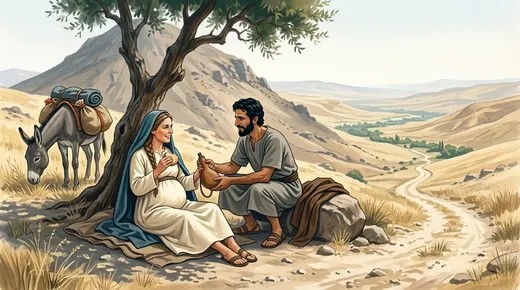 Both place the birth in Bethlehem during the census journey, with the baby laid in a manger because the inn was full; the Urantia Book adds an exact date and hour.Bethlehem (Judea)Mary (mother of Jesus)Joseph (father of Jesus)
Did shepherds come to the manger?
They differThe BibleAn angel appears to shepherds in the fields by night, a multitude of the heavenly host praises God, and the shepherds hurry to Bethlehem and find the baby in the manger.
“And they came with haste, and found Mary, and Joseph, and the babe lying in a manger.” Lk 2:16
Read: Lk 2:8-16
The Urantia BookThe seraphim did sing anthems over the manger at the noontide birth, but no human ears heard them, and no shepherds or anyone else came to honour the baby until the priests from Ur arrived.
“No shepherds nor any other mortal creatures came to pay homage to the babe of Bethlehem until the day of the arrival of certain priests from Ur” 122:8.5
Read: 122:8.5
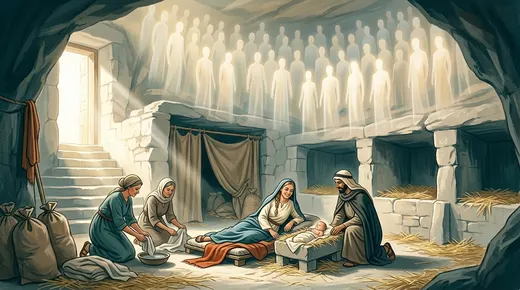 Both have angels sing at the birth, but in the Urantia Book nobody heard them and no shepherds came.Bethlehem (Judea)
The star and the wise men
They differThe BibleWise men from the east follow a star to Jerusalem and then to Bethlehem, where it stands over the house; they worship the child and give gold, frankincense and myrrh.
“and, lo, the star, which they saw in the east, went before them, till it came and stood over where the young child was.” Mt 2:9
Read: Mt 2:1-12
The Urantia BookThree priests from Ur, sent on to Bethlehem by Zacharias, found the baby when he was almost three weeks old. They saw no star; the Urantia Book says later believers built the legend from conjunctions of Jupiter and Saturn in 7 B.C.
“These wise men saw no star to guide them to Bethlehem.” 122:8.7
Both have wise men from the east bring gifts to the infant, but the Urantia Book calls the guiding star a legend that grew out of a natural planetary conjunction.Wise men (Magi)UrZachariasBethlehem (Judea)
Herod's massacre and the flight to Egypt
Same event, different detailsThe BibleAn angel warns Joseph in a dream to flee into Egypt; Herod then kills all the children of Bethlehem and its region aged two years and under.
“and slew all the children that were in Bethlehem, and in all the coasts thereof, from two years old and under” Mt 2:16
Read: Mt 2:13-16
The Urantia BookAfter a year of failed searching Herod had sixteen boy babies of Bethlehem killed in October, 6 B.C.; a believer at Herod's court tipped off Zacharias, whose messenger warned Joseph, and the family fled the night before to Alexandria, staying two years.
“And thus perished in one day sixteen boy babies in Bethlehem of Judea.” 122:10.3
Both report the killing of Bethlehem's infant boys and the family's escape to Egypt; the Urantia Book gives a human warning in place of the dream and a count of sixteen.Herod the GreatAlexandriaEgyptZacharias
Jesus' brothers and sisters
The two agreeThe BibleThe people of Nazareth name four brothers of Jesus, James, Joses, Simon and Judas, and mention his sisters.
“and his brethren, James, and Joses, and Simon, and Judas?” Mt 13:55
Read: Mt 13:55-56; Mk 6:3
The Urantia BookJesus was the first of nine children of Joseph and Mary: James, Miriam, Joseph, Simon, Martha, Jude, Amos and Ruth. Joseph died in an accident when Jesus was fourteen, leaving him to help raise them.
“Jesus had a sizable family of small children left to his watchcare when his father met his accidental death the following year.” 124:5.2
Read: 123:2.3 123:4.9 123:6.7 124:1.7 124:3.4 124:5.2 126:3.2
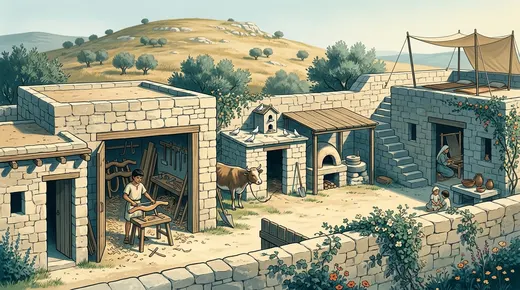 Both give Jesus real brothers and sisters with matching names; the Urantia Book adds the sisters' names, two more brothers and Joseph's early death.James (brother of Jesus)JudeMiriam (sister of Jesus)Martha (sister of Jesus)Amos (brother of Jesus)Joseph (brother of Jesus)
The boy Jesus in the temple
The two agreeThe BibleAt twelve, Jesus stays behind in Jerusalem after the Passover; after three days his parents find him in the temple among the teachers and he asks whether they knew he must be about his Father's business.
“How is it that ye sought me? wist ye not that I must be about my Father’s business?” Lk 2:49
Read: Lk 2:41-51
The Urantia BookAfter more than three days of searching, Joseph and Mary find him seated among the temple teachers; Mary scolds him in front of everyone, and he answers that they should have expected to find him in his Father's house.
“Would you not expect to find me in my Father’s house since the time has come when I should be about my Father’s business?” 125:6.7
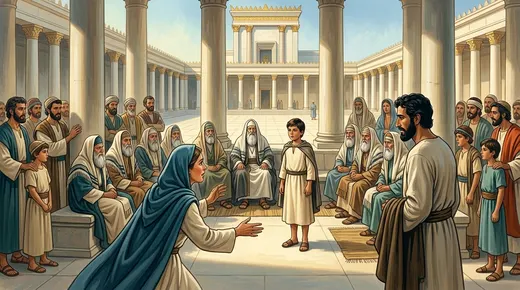 The two tell the same story with nearly the same words; the Urantia Book adds the conversations of the days before and Mary's public rebuke.Jerusalem templeMary (mother of Jesus)Joseph (father of Jesus)
The years from twelve to thirty
The Bible is silentThe BibleAfter the temple visit the Bible says only that Jesus went home to Nazareth, obeyed his parents, and grew in wisdom and stature.
“And Jesus increased in wisdom and stature, and in favour with God and man.” Lk 2:52
Read: Lk 2:51-52
The Urantia BookJesus became head of the family after Joseph's death, worked as a carpenter and boatbuilder, and spent nearly two years touring the Roman world as tutor to the Indian traveller Gonod and his son Ganid, meeting Tiberius in Rome.
“THE tour of the Roman world consumed most of the twenty-eighth and the entire twenty-ninth year of Jesus’ life on earth.” 130:0.1
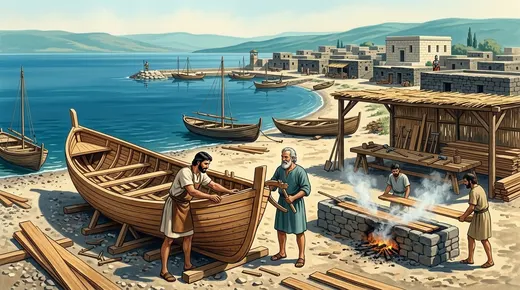 The Bible says almost nothing about these eighteen years; the Urantia Book gives them nine papers of narrative.GonodGanidRomeZebedee
The four gospelsThe public ministry
John the Baptist preaches
The two agreeThe BibleJohn preaches in the wilderness of Judaea that the kingdom of heaven is at hand, dressed in camel's hair with a leather belt, and baptizes crowds in the Jordan.
“And the same John had his raiment of camel’s hair, and a leathern girdle about his loins; and his meat was locusts and wild honey.” Mt 3:4
Read: Mt 3:1-6
The Urantia BookJohn, a lifelong Nazarite who herded sheep in the wilderness of Judea, dressed like Elijah from the age of sixteen and in March, A.D. 25, began preaching "the kingdom of heaven is at hand" at the Jordan ford near Jericho.
“From that day on John always wore a hairy garment with a leather girdle.” 135:1.4
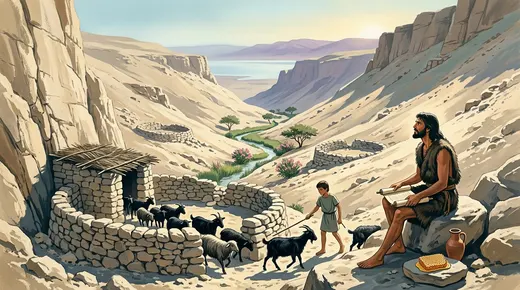 Both describe the same wilderness prophet, the same dress and the same message; the Urantia Book adds his upbringing and the reason for his dress.John the BaptistNazaritesJordan RiverKingdom of heaven
The baptism of Jesus
Same event, different detailsThe BibleJohn at first refuses to baptize Jesus, then does; the heavens open, the Spirit of God descends like a dove, and a voice from heaven calls him the beloved Son.
“And lo a voice from heaven, saying, This is my beloved Son, in whom I am well pleased.” Mt 3:17
Read: Mt 3:13-17; Mk 1:9-11
The Urantia BookJohn baptized Jesus with his brothers James and Jude on January 14, A.D. 26; an apparition appeared over Jesus' head and the four heard a voice, which the Urantia Book identifies as that of Jesus' newly Personalized Thought Adjuster.
“they heard a voice saying, “This is my beloved Son in whom I am well pleased.”” 135:8.6
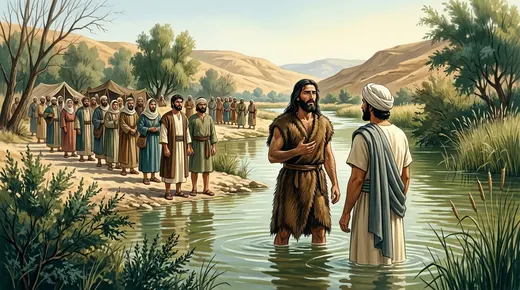 The words, John's reluctance and the heavenly sign are the same; the Urantia Book adds Jesus' brothers and explains the descending spirit as his own Personalized Adjuster.John the BaptistPersonalized AdjustersJordan RiverJames (brother of Jesus)
The temptation in the wilderness
They differThe BibleAfter his baptism the Spirit leads Jesus into the wilderness, where he fasts forty days and the devil tempts him to turn stones into bread, leap from the temple and worship him for the kingdoms of the world.
“Then was Jesus led up of the Spirit into the wilderness to be tempted of the devil.” Mt 4:1
The Urantia BookThe forty days were a time of great decisions, not temptation, and no evil spirits tempted him there; his real trial against Satan and Caligastia had happened earlier on Mount Hermon, and the Urantia Book says the wilderness story came from confusing the two.
“Subsequently the tradition of a great temptation became attached to this period of isolation through confusion with the fragmentary narratives of the Mount Hermon struggles” 136:4.10
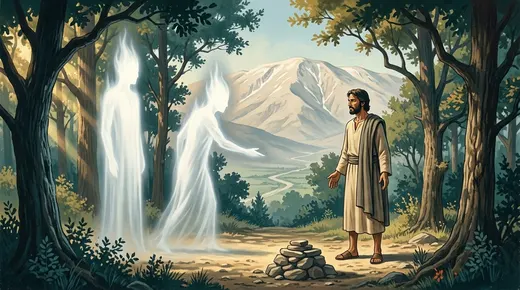 The Bible puts a temptation by the devil in the forty days after the baptism; the Urantia Book calls that a later confusion and places the real test earlier, on Mount Hermon.Mount HermonCaligastiaPersonalized Adjusters
Calling the first apostles
Same event, different detailsThe BibleMark has Jesus call Simon and Andrew from their nets by the Sea of Galilee, then James and John; John's Gospel has Andrew, a disciple of John the Baptist, follow Jesus first and bring his brother Simon.
“Come ye after me, and I will make you to become fishers of men.” Mk 1:17
Read: Mk 1:16-20; Jn 1:35-42
The Urantia BookAndrew, one of John the Baptist's disciples, pledged himself to Jesus on the road back from Pella and brought his brother Simon; James and John Zebedee joined that same night, and these four became the first apostles.
“Of all John’s followers one named Andrew was the most profoundly impressed with Jesus” 137:1.1
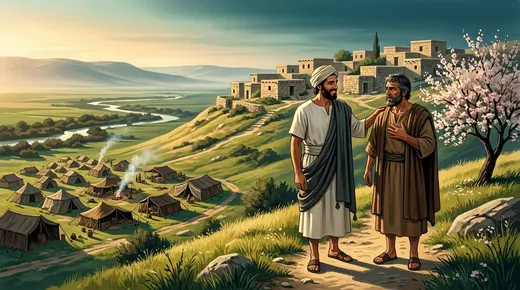 The Urantia Book follows John's Gospel, with Andrew coming from the Baptist's camp and bringing Simon, rather than Mark's call from the fishing nets.AndrewSimon PeterJames ZebedeeJohn ZebedeeApostles of JesusPella
Water into wine at Cana
Same event, different detailsThe BibleWhen the wine runs out at a wedding in Cana, Jesus has the servants fill six stone waterpots with water, which becomes good wine; John calls this the beginning of his miracles.
“This beginning of miracles did Jesus in Cana of Galilee, and manifested forth his glory; and his disciples believed on him.” Jn 2:11
Read: Jn 2:1-11
The Urantia BookJesus had decided against any public wonder and refused Mary twice, but his unspoken wish to help was carried out by unseen agencies, and the water in the pots became wine. The Urantia Book says this was not a miracle but the making of wine without the usual passage of time.
“Of all persons present at the marriage feast of Cana, Jesus was the most surprised.” 137:4.12
Both have water become wine at Mary's urging; in the Urantia Book Jesus did not intend it and gave no order to fill the pots.CanaMary (mother of Jesus)
The Sermon on the Mount
Same event, different detailsThe BibleSeeing the crowds, Jesus goes up a mountain, his disciples come to him, and he teaches them the beatitudes and the rest of the sermon.
“Blessed are the poor in spirit: for theirs is the kingdom of heaven.” Mt 5:3
Read: Mt 5:1-12
The Urantia BookThe sermon was Jesus' charge to the twelve at their ordination in the hills above Capernaum on January 12, A.D. 27, beginning with beatitudes such as "Happy are the poor in spirit." The Urantia Book says it was not the gospel itself.
“The so-called “Sermon on the Mount” is not the gospel of Jesus.” 140:4.1
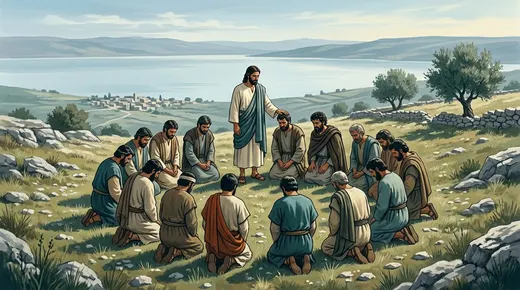 The teaching is largely the same, but the Urantia Book says it was spoken to the twelve as an ordination charge, not preached as the gospel to a crowd.Sermon on the MountApostles of JesusCapernaum
The sundown healing at Capernaum
The two agreeThe BibleAt sunset the sick and possessed of Capernaum are brought to the door, the whole city gathers, and Jesus heals many.
“And he healed many that were sick of divers diseases, and cast out many devils” Mk 1:34
Read: Mk 1:32-34
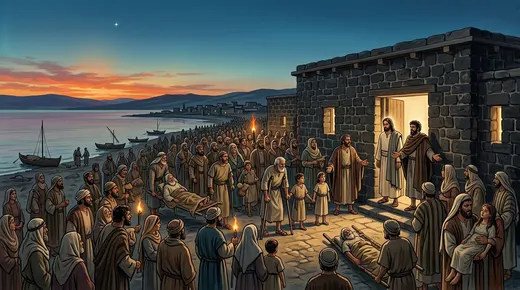 Both describe a mass healing at sunset in Capernaum; the Urantia Book gives a number and adds that few of those healed were changed spiritually.CapernaumBethsaidaZebedee
Why Jesus taught in parables
The two agreeThe BibleSitting in a boat, Jesus teaches the crowd on the shore in parables; asked why, he tells the disciples the mysteries of the kingdom are given to them but not to others, who see without seeing.
“Therefore speak I to them in parables: because they seeing see not; and hearing they hear not, neither do they understand.” Mt 13:13
Read: Mt 13:1-13; Mk 4:10-12
The Urantia BookJesus first used parables from Peter's boat by the lake, and told the apostles that sincere seekers would grasp their meaning while those listening to trap him would be confounded; he also taught that a story lets each hearer take what he can.
“those who listen only to ensnare us may be the more confounded in that they will see without seeing and will hear without hearing.” 151:1.4
The Urantia Book repeats the gospel saying almost word for word, applying the blindness to hostile listeners and adding Jesus' reasons for teaching by story.ParablesKingdom of heaven
The demons and the swine
They differThe BibleJesus casts a legion of unclean spirits out of a man among the tombs; at their request he lets them enter a herd of about two thousand swine, which rush down a steep place into the sea.
“And the unclean spirits went out, and entered into the swine: and the herd ran violently down a steep place into the sea” Mk 5:13
Read: Mk 5:1-20
The Urantia BookJesus told the troubled man, Amos, that he was not possessed and restored his mind; meanwhile dogs drove about thirty untended swine over a cliff, and the Urantia Book says the legend of the devils entering the swine grew from that coincidence.
“gave origin to the legend that Jesus had cured Amos by casting a legion of devils out of him” 151:6.6
Both have a deranged man healed and swine lost over a cliff into the sea, but the Urantia Book says no devils were cast out and calls the link a legend.Amos (Kheresa lunatic)Kheresa
Feeding the five thousand
The two agreeThe BibleWith five loaves and two fishes Jesus feeds about five thousand men, besides women and children, and twelve baskets of fragments are left; afterwards the crowd wants to make him king.
“And they did all eat, and were filled: and they took up of the fragments that remained twelve baskets full.” Mt 14:20
Read: Mt 14:15-21; Jn 6:5-15
The Urantia BookNear Bethsaida-Julias, Andrew brought five barley loaves and two dried fishes, Jesus fed about five thousand people and twelve baskets were gathered, and the crowd then tried to crown him king. The Urantia Book calls it a genuine supernatural act.
“And this is the first and only nature miracle which Jesus performed as a result of his conscious preplanning.” 152:2.10
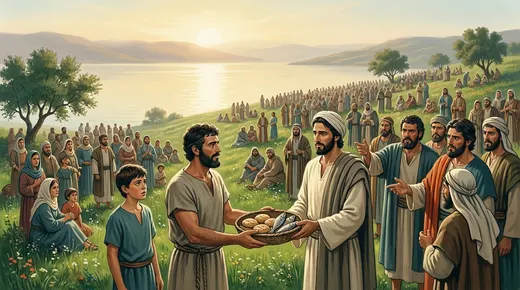 The Urantia Book confirms the miracle and its details, and adds that it was the only nature miracle Jesus deliberately planned.Feeding the 5000AndrewBethsaida-Julias
Walking on the water
They differThe BibleIn the night Jesus comes to the disciples' boat walking on the sea; Peter asks to come to him and walks on the water until he grows afraid and begins to sink.
“And in the fourth watch of the night Jesus went unto them, walking on the sea.” Mt 14:25
Read: Mt 14:22-33; Mk 6:45-52
The Urantia BookAsleep in the stern, Peter dreamed he saw Jesus walking on the sea and stepped overboard in his sleep. The Urantia Book says Peter always believed it, Mark left part of the story out, and Luke judged it a vision and omitted it.
“Peter dreamed a dream; he saw a vision of Jesus coming to them walking on the sea.” 152:4.2
The Bible tells it as an event the disciples saw; the Urantia Book says it was Peter's dream.Simon PeterGospel of LukeMark, Gospel of
Peter's confession
Same event, different detailsThe BibleAsked who they say he is, Peter answers that Jesus is the Christ, the Son of the living God; Jesus blesses him and says that on this rock he will build his church.
“That thou art Peter, and upon this rock I will build my church; and the gates of hell shall not prevail against it.” Mt 16:18
Read: Mt 16:13-19
The Urantia BookNear Caesarea Philippi, Peter declared Jesus the Deliverer and Son of the living God, speaking for all twelve. The next day Jesus told them he would build the brotherhood of the kingdom on the rock of this spiritual insight.
“Upon this rock of spiritual reality will I build the living temple of spiritual fellowship” 157:4.5
Both have Peter make the confession and Jesus speak of a rock; the Urantia Book makes the rock the confession's spiritual reality, not Peter.Simon PeterCaesarea PhilippiApostles of Jesus
The transfiguration
Same event, different detailsThe BibleOn a high mountain Jesus' face shines like the sun before Peter, James and John; Moses and Elijah talk with him, and a voice from a bright cloud says, This is my beloved Son.
“And, behold, there appeared unto them Moses and Elias talking with him.” Mt 17:3
Read: Mt 17:1-8
The Urantia BookOn Mount Hermon the three apostles saw Jesus shining in light and talking with two radiant beings, and heard the voice from a cloud. The Urantia Book says Peter wrongly took the two for Moses and Elijah.
“Peter erroneously conjectured that the beings with Jesus were Moses and Elijah; in reality, they were Gabriel and the Father Melchizedek.” 158:1.8
The scene, the witnesses and the voice match, but the Urantia Book names the two visitors as Gabriel and the Father Melchizedek, not Moses and Elijah.TransfigurationMount HermonGabrielFather MelchizedekSimon Peter
The rich man and Lazarus
They differThe BibleJesus tells of a rich man who dies and finds himself in torment in hell, begging Abraham to send the beggar Lazarus to cool his tongue.
“And in hell he lift up his eyes, being in torments, and seeth Abraham afar off, and Lazarus in his bosom.” Lk 16:23
Read: Lk 16:19-31
The Urantia BookPeter, not Jesus, recited this story, an old Nazarite allegory that John the Baptist used to preach; Peter said it was not the gospel they preached, and Jesus never would comment on it.
“And while this olden parable is not according to the gospel we preach, you would all do well to heed its lessons” 169:3.1
The Bible gives the parable as Jesus' own teaching; the Urantia Book attributes it to Peter, from an older Nazarite source.DivesLazarus (of Nazarite parable)NazaritesSimon Peter
The raising of Lazarus
The two agreeThe BibleAt Bethany, after Lazarus has been dead four days, Jesus has the stone taken away, prays, and calls him out of the tomb, still bound in grave clothes.
“And he that was dead came forth, bound hand and foot with graveclothes” Jn 11:44
Read: Jn 11:38-44
The Urantia BookLazarus, dead four days, came out of the tomb at Jesus' call, his Thought Adjuster returning to him; the Urantia Book calls it the first and only time on earth a mortal was raised in his physical body.
“the first instance on Urantia, and the last, where a mortal creature had been resurrected in the likeness of the physical body of death.” 168:2.8
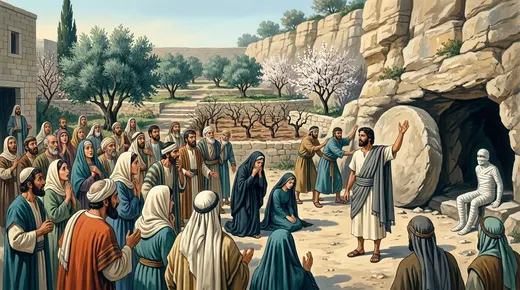 Both present it as a true raising from the dead after four days in the tomb.Lazarus (of Bethany)Bethany (near Jerusalem)Martha (sister of Lazarus)
Gospels: the passionThe last week
The entry into Jerusalem on a donkey
The two agreeThe BibleJesus sent two disciples for an ass's colt and rode it into Jerusalem, fulfilling Zechariah's prophecy, while crowds spread garments and branches and shouted hosannas. Luke adds that as he came near he wept over the city.
“Behold, thy King cometh unto thee, meek, and sitting upon an ass” Mt 21:5
Read: Mt 21:1-11; Mk 11:1-10; Lk 19:29-44; Jn 12:12-15
The Urantia BookJesus chose Zechariah's prophecy on purpose and rode a colt as a king of peace, to show by a symbol that his kingdom was spiritual. The crowd carpeted the road with garments and branches and sang the hosanna Psalm, and on the brow of Olivet he stopped and wept over Jerusalem.
“a king on a mission of peace and friendship always entered riding upon an ass” 172:3.5
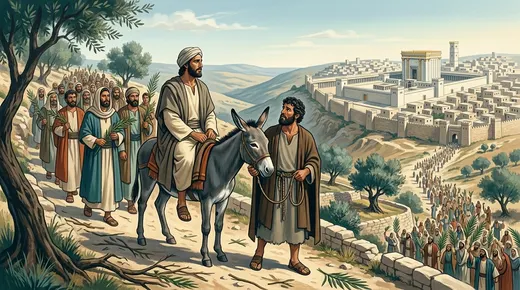 Both tell the same procession, prophecy, hosannas and weeping; the Urantia Book adds Jesus' reasons for the donkey and says the crowd that came out from the city was organized by others, not by him.JesusJerusalemMount OlivetBethphageZechariah
When did Jesus cleanse the temple?
Same event, different detailsThe BibleMatthew, Mark and Luke put the cleansing in the last week, Mark on the day after the entry, with Jesus overthrowing the money-changers' tables. John puts it at a Passover at the start of the ministry.
“when he had made a scourge of small cords, he drove them all out of the temple” Jn 2:15
Read: Mk 11:11-18; Mt 21:12-13; Jn 2:13-16
The Urantia BookThe Urantia Book tells of one cleansing, on the Monday after the entry: Jesus took a lad's whip and drove the animals out, and the roused pilgrims overturned the money-changers' tables. It reads the act as Jesus' opposition to commercialized religion and profiteering at the expense of the poor.
“took from him his whip of cords and swiftly drove the animals from the temple” 173:1.7
The Urantia Book matches Mark's timing and has no cleansing at the start of the ministry as in John, and it has the crowd, not Jesus, overturn the tables.Cleansing the templeJerusalem temple
Why did Judas betray Jesus?
Same event, different detailsThe BibleSatan entered into Judas, who went to the chief priests and asked what they would give him; they agreed on thirty pieces of silver. John adds that he was a thief who kept the common purse.
“Then entered Satan into Judas surnamed Iscariot” Lk 22:3
Read: Lk 22:3-6; Jn 13:2; Jn 12:6; Mt 26:14-16
The Urantia BookJudas acted out of long-nursed resentment and disappointed ambition, including a grudge that Jesus had not saved John the Baptist, made worse by his isolation from the other apostles. He asked what they would give him, but the thirty pieces of silver were handed to him only afterward, to his humiliation.
“Judas’s betrayal of Jesus was the cowardly act of a selfish deserter whose only thought was his own safety and glorification” 177:4.9
Both have Judas offer himself to the priests and ask for pay; the Bible gives Satan and greed as the cause, the Urantia Book a gradual personal decline, and the Urantia Book puts the payment after the arrest, not as an agreed price.Judas IscariotCaiaphas
The Last Supper: body and blood, or remembrance?
Same event, different detailsThe BibleJesus gave the bread, saying "this is my body," and the cup, "my blood of the new testament," shed for the remission of sins. Luke and Paul add "this do in remembrance of me."
“For this is my blood of the new testament, which is shed for many for the remission of sins.” Mt 26:28
Read: Mt 26:26-29; Mk 14:22-25; Lk 22:17-20; 1 Co 11:23-26
The Urantia BookJesus first blessed "the cup of my remembrance," an emblem of the Spirit of Truth, then gave "this bread of remembrance," saying he was the bread of life. He used symbols so his meaning could not be fixed in dogma, and the Urantia Book says later generations reduced it to a set formula anyway.
“his simple spiritual symbolism of that last night in the flesh has been reduced to precise interpretations and subjected to the almost mathematical precision of a set formula” 179:5.5
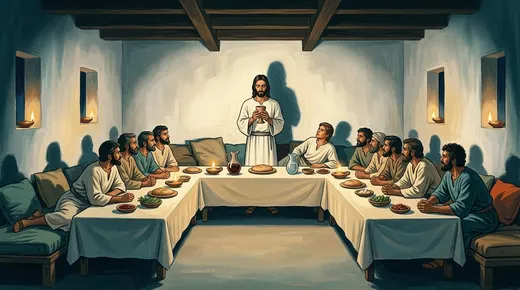 The Urantia Book keeps the bread, the cup and "in remembrance of me" but puts the cup first (as Luke 22:17 also does), has no words about body and blood shed for sins, and calls the fixed sacramental readings a later departure.Last SupperRemembrance SupperCup of remembrance
The prayer in Gethsemane
The two agreeThe BibleJesus took Peter, James and John apart and prayed three times that the cup might pass, "not my will, but thine," finding them asleep each time. Luke adds an angel who strengthened him and sweat like great drops of blood.
“And there appeared an angel unto him from heaven, strengthening him.” Lk 22:43
Read: Mt 26:36-46; Mk 14:32-42; Lk 22:39-46
The Urantia BookJesus took the same three apostles, prayed three times about drinking the cup, ending "Not my will, but yours, be done," and found them asleep each time. A mighty angel strengthened him, and perspiration rolled off his face in great drops as he resolved not to use his power to save himself.
“a mighty angel came down by his side and, speaking to him, touched him and strengthened him” 182:3.2
The accounts match down to the three prayers, the sleeping apostles and the angel; the Urantia Book describes great drops of sweat without Luke's comparison to blood.GethsemaneJesusPeterJames ZebedeeJohn Zebedee
The kiss and the arrest
Same event, different detailsThe BibleJudas led the band and kissed Jesus; when Jesus said "I am he" they fell backward. Peter cut off the right ear of Malchus, which Jesus healed, and a young man fled naked, leaving his linen cloth behind.
“Judas, betrayest thou the Son of man with a kiss?” Lk 22:48
Read: Lk 22:47-51; Jn 18:3-12; Mk 14:43-52
The Urantia BookJesus identified himself, the front ranks fell backward, and Judas still gave the kiss. Peter drew his sword and rushed at Malchus, but Jesus stopped him, and the young man who escaped naked from a soldier's grip was John Mark.
“Would you even betray the Son of Man with a kiss?” 183:3.5
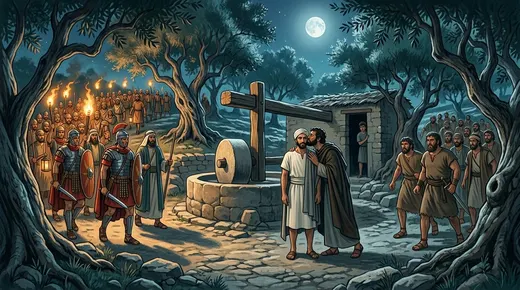 The Urantia Book tells the same arrest, including the kiss, the falling back, Malchus and the naked young man (naming him John Mark), but mentions no severed ear and no healing.Judas IscariotMalchusJohn MarkPeterGethsemane
Peter's denial
The two agreeThe BibleIn the high priest's courtyard Peter denied Jesus three times; the cock crew, Jesus turned and looked at him, and Peter went out and wept bitterly.
“And the Lord turned, and looked upon Peter.” Lk 22:61
Read: Lk 22:54-62; Mt 26:69-75; Jn 18:15-27
The Urantia BookPeter denied Jesus repeatedly; at the cock's crow Jesus, being led past toward Caiaphas, turned and looked at him, and Peter sat by the road and wept bitterly. The Urantia Book places it all in the courtyard of Annas, outside the city, where keeping poultry was allowed.
“Peter’s entire experience occurred in the courtyard of the palace of Annas on Mount Olivet.” 184:2.10
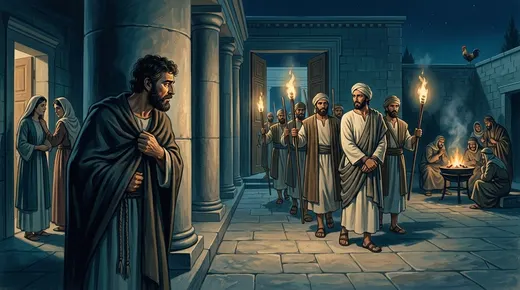 The story is the same; the Urantia Book sets it at Annas's house, as John's sequence allows, rather than at Caiaphas's as in Matthew.PeterAnnasCaiaphas
The death of Judas
The two agreeThe BibleJudas repented, brought the silver back, confessed to the priests, cast the pieces down in the temple and hanged himself. Acts says that falling headlong he burst asunder.
“I have sinned in that I have betrayed the innocent blood.” Mt 27:4
Read: Mt 27:3-10; Acts 1:18-19
The Urantia BookJudas confessed to the Sanhedrin that he had betrayed innocent blood, was told "See you to that," and threw the silver over the temple floor. In the valley of Hinnom he tied his girdle to a tree above a precipice and leaped; the knot gave way and he fell onto the rocks.
“Ere he was dead, the knot which his nervous hands had tied gave way, and the betrayer’s body was dashed to pieces as it fell on the jagged rocks below.” 186:1.7
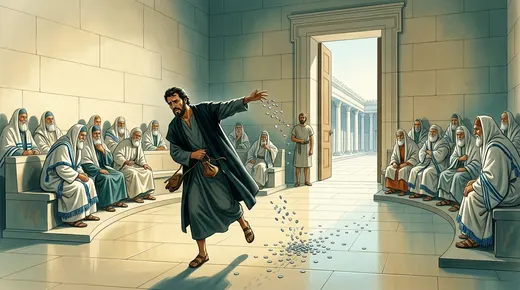 The Urantia Book repeats Matthew's confession and reply and joins Matthew's hanging and Acts' fall into a single event; it does not say what became of the silver.Judas IscariotHinnom, valley of
"Today in paradise"
Same event, different detailsThe BibleOne of the two criminals rebuked the other and asked Jesus to remember him when he came into his kingdom, and Jesus promised him paradise that same day.
“To day shalt thou be with me in paradise.” Lk 23:43
Read: Lk 23:39-43
The Urantia BookThe repentant brigand made the same plea, and Jesus answered that he would sometime be with him in Paradise. The Urantia Book adds that Luke had the story from the converted Roman centurion, since John was away at the time, and that John wrote of the crucifixion two thirds of a century later.
“Verily, verily, I say to you today, you shall sometime be with me in Paradise.” 187:4.1
Same exchange, but in the Urantia Book "today" belongs to the saying, so the promise is of Paradise sometime rather than that day.BrigandsLukeParadise
The darkness over the land
Same event, different detailsThe BibleDarkness covered the land from the sixth hour to the ninth. Matthew adds that at Jesus' death the temple veil tore, the earth quaked, and saints rose from opened graves.
“Now from the sixth hour there was darkness over all the land unto the ninth hour.” Mt 27:45
Read: Mt 27:45; Mt 27:51-53; Mk 15:33; Lk 23:44-45
The Urantia BookShortly after noon a hot-wind sandstorm from the Arabian Desert darkened the sky until the sun was hidden, and it grew fiercer until Jesus died. The Urantia Book does not mention a torn veil, an earthquake or risen saints.
“shortly after twelve o’clock the sky darkened by reason of the fine sand in the air” 187:5.1
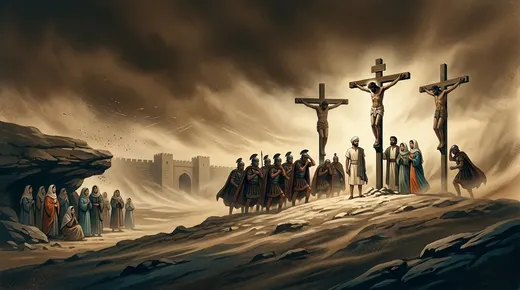 Both darken the sky over the cross from about noon to three; the Urantia Book gives a natural cause, a desert sandstorm, and has none of Matthew's other signs.Golgotha
"My God, my God, why hast thou forsaken me?"
Same event, different detailsThe BibleFrom the cross Jesus asked forgiveness for his executioners, gave his mother to the beloved disciple, cried "Eli, Eli, lama sabachthani," said "I thirst" and "It is finished," and commended his spirit to the Father.
“My God, my God, why hast thou forsaken me?” Mt 27:46
Read: Lk 23:34; Jn 19:26-30; Mt 27:46; Lk 23:46
The Urantia BookThe Urantia Book records the same sayings, ending "It is finished! Father, into your hands I commend my spirit." It says the cry of abandonment was a line of Psalm 22 that Jesus was reciting as his consciousness faded, and that he never felt the Father had left him.
“He did not feel that the Father had forsaken him; he was merely reciting in his vanishing consciousness many Scriptures” 187:5.2
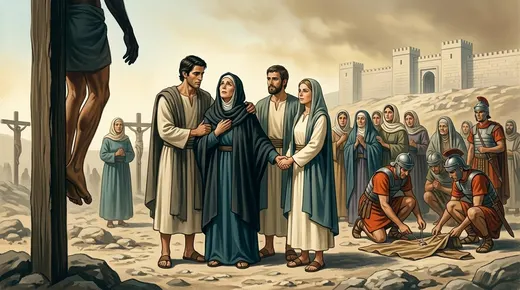 The words from the cross agree, but the Urantia Book reads the forsaken cry as a recited Psalm, not an expression of abandonment.PsalmsMary (mother of Jesus)John ZebedeeGolgotha
Why did Jesus die: ransom and atonement?
They differThe BibleJesus came to give his life a ransom for many; Christ died for our sins, and believers are justified by his blood and reconciled to God by his death. Hebrews says that without shedding of blood there is no remission.
“being now justified by his blood, we shall be saved from wrath through him.” Ro 5:9
The Urantia BookJesus did not die to atone for human guilt, appease an offended God, or ransom man from the rebels; the Urantia Book calls the ideas of atonement and propitiation erroneous. His death reveals the Father's love and makes survival more certain, so he is properly called a savior, not a ransomer.
“The whole idea of ransom and atonement is incompatible with the concept of God as it was taught and exemplified by Jesus of Nazareth.” 188:4.8
The New Testament explains the cross as ransom and atoning sacrifice; the Urantia Book explicitly rejects both and reads it as a revelation of God's love as a Father.Atonement doctrineRansom doctrineWorld of the cross
The burial in Joseph's tomb
The two agreeThe BibleJoseph of Arimathea, a secret disciple, got Pilate's leave to take the body; Nicodemus brought myrrh and aloes, and they wrapped it in linen and laid it in a new tomb nearby while the women watched. Matthew adds a sealed stone and a guard.
“brought a mixture of myrrh and aloes” Jn 19:39
Read: Jn 19:38-42; Mt 27:57-66; Lk 23:50-56
The Urantia BookJoseph obtained Pilate's order for the body, and he and Nicodemus embalmed it with myrrh and aloes and laid it in Joseph's new rock tomb, where no one had yet lain, as the Galilean women watched. A guard was set and Pilate's seal placed on the stones the next day.
“Joseph and Nicodemus had brought with them large quantities of myrrh and aloes” 188:1.4
The accounts agree on nearly every detail; the Urantia Book adds that the Sanhedrin had meant the body to go to the open burial pits of Gehenna.Joseph of ArimatheaNicodemusPontius Pilate
Gospels, Acts, the lettersResurrection and the early church
Was Jesus' physical body raised?
They differThe BibleThe women and then Peter found the tomb empty. The risen Jesus showed his hands and feet, told the disciples a spirit has not flesh and bones as he had, and ate broiled fish before them.
“handle me, and see; for a spirit hath not flesh and bones, as ye see me have.” Lk 24:39
Read: Lk 24:1-6; Lk 24:36-43; Jn 20:1-10
The Urantia BookJesus rose in a morontia form and left his body of flesh lying in the tomb, which the celestial hosts then dissolved almost instantly. The Urantia Book says the tomb was truly empty, but the belief that his mortal body was raised is not true, and that morontia bodies are real but have no blood and eat no ordinary food.
“led to the formulation of a belief which was not true: the teaching that the material and mortal body of Jesus was raised from the grave” 189:2.6
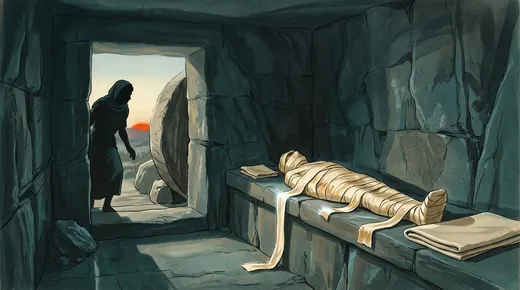 Both have an empty tomb and a real, recognizable risen Jesus, but the Urantia Book says the risen form was not his flesh body, which it says was dissolved, closer to Paul's "spiritual body" (1 Cor 15:44) than to Luke's flesh and bones.ResurrectionMorontiaArchangels
The stone, the guards, and the stolen-body story
Same event, different detailsThe BibleAn angel came down in an earthquake, rolled back the stone and sat on it, and the guards shook with fear. The chief priests then paid the soldiers to say the disciples had stolen the body while they slept.
“Say ye, His disciples came by night, and stole him away while we slept.” Mt 28:13
Read: Mt 28:2-4; Mt 28:11-15
The Urantia BookUnseen secondary midwayers rolled the stones away, and the guards, seeing the huge stone move with no visible cause, fled in panic. The Jewish leaders bribed all twenty guards to say the disciples took the body while they slept.
“While we slept during the nighttime, his disciples came upon us and took away the body.” 189:2.5
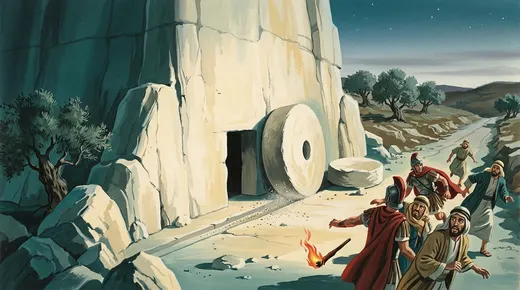 Both have the guards flee in fear and then take money to tell the stolen-body story; the Urantia Book credits the stone to unseen midwayers rather than a shining angel, and says Jesus had already left the tomb without moving it.Midwayers, secondaryJerusalem temple guards
How many times was the risen Jesus seen?
The two agreeThe BiblePaul lists appearances to Cephas, the twelve, more than five hundred brethren at once, James, all the apostles, and last himself; Acts says Jesus was seen over forty days.
“After that, he was seen of above five hundred brethren at once” 1 Co 15:6
Read: 1 Co 15:5-8; Acts 1:3; Lk 24:13-35; Mk 16:9
The Urantia BookBetween the resurrection and the ascension Jesus made nineteen appearances, only to believers, beginning with the women at the tomb. They include his brother James at Bethany, the two on the road to Emmaus, and a gathering in Galilee where upward of five hundred saw him at once.
“Jesus made nineteen separate appearances in visible form to his believers on earth” 190:2.1
The Urantia Book includes the appearances the Bible names, among them James and the five hundred, and gives an exact count of nineteen.ResurrectionJames (brother of Jesus)EmmausMary Magdalene
Thomas and the nail prints
Same event, different detailsThe BibleThomas would not believe without touching the print of the nails. Eight days later Jesus came through shut doors, invited him to reach his finger into his hands and side, and Thomas said "My Lord and my God."
“Reach hither thy finger, and behold my hands; and reach hither thy hand, and thrust it into my side” Jn 20:27
Read: Jn 20:24-29
The Urantia BookA week later Jesus appeared at the barred supper room and told Thomas he would see no nail marks, because he was raised in the form Thomas would have after death. Thomas knelt and said "I believe! My Lord and my Master!"
“though you see no nail marks on my hands, since I am raised in the form that you also shall have when you depart from this world” 191:5.4
Same scene, condition, "be not faithless but believing" and blessing on those who believe unseen; in the Urantia Book the risen form has no wounds, so there is nothing to touch.Thomas Didymus
The catch of fish and breakfast by the lake
The two agreeThe BibleAfter a fruitless night's fishing a man on shore told the disciples to cast on the right side; the net filled with 153 great fish, the beloved disciple said "It is the Lord," Peter jumped into the sea, and Jesus gave them bread and fish by a fire.
“Cast the net on the right side of the ship, and ye shall find.” Jn 21:6
Read: Jn 21:1-14
The Urantia BookThe Urantia Book tells the same morning at Bethsaida: the stranger's direction, the full net, John whispering "It is the Master," Peter in the water, a fire and bread waiting, and 153 large fish. It adds that this was no miracle but Jesus' foreknowledge of where the fish were.
“Cast the net on the right side of the boat, and you will find fish.” 192:1.3
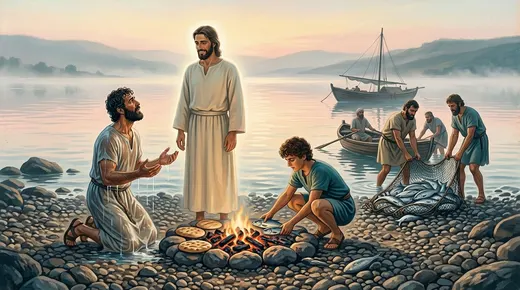 The Urantia Book follows John 21 closely, even to the count of fish, adding John Mark's presence and saying the catch was foreknowledge rather than a miracle.BethsaidaSea of GalileePeterJohn ZebedeeJohn Mark
The ascension from Olivet
Same event, different detailsThe BibleAfter forty days Jesus told the apostles to wait in Jerusalem for the Holy Ghost; then, as they watched on the mount called Olivet, he was taken up and a cloud hid him.
“while they beheld, he was taken up; and a cloud received him out of their sight.” Acts 1:9
Read: Acts 1:3-12; Lk 24:50-51
The Urantia BookOn the western slope of Olivet Jesus gave a last charge to wait for the Spirit of Truth and to love men as he had, and then vanished. The Urantia Book says this "so-called ascension" was like his other disappearances, and that he went on to Edentia by way of Jerusem.
“This so-called ascension of Jesus was in no way different from his other disappearances from mortal vision during the forty days of his morontia career on Urantia.” 193:5.3
Same place, same forty days and same charge to wait for the Spirit; the Urantia Book has no visible rising into a cloud, only a vanishing.Mount OlivetJerusemEdentia
Will Jesus come again?
Same event, different detailsThe BibleTwo men in white told the apostles that Jesus would come back as they had seen him go. In Matthew Jesus ties his coming in the clouds to the end of the age, says "this generation shall not pass" first, and that no man knows the day.
“this same Jesus, which is taken up from you into heaven, shall so come in like manner as ye have seen him go into heaven.” Acts 1:11
Read: Acts 1:10-11; Mt 24:30; Mt 24:34-36
The Urantia BookJesus certainly promised to return but did not say how, where or when. His followers tied the return to the fall of Jerusalem and, when he did not appear then, to the end of the world; the Urantia Book says it should be tied to no set event.
“You would do well, therefore, to disassociate the Master’s personal return to earth from any and all set events or settled epochs.” 176:4.6
Both affirm a personal return at an unknown time; the Urantia Book says linking it to the end of the world was a later belief that formed when Jerusalem fell and he had not come.Second coming
Pentecost and the gift of tongues
Same event, different detailsThe BibleA sound like a rushing wind filled the house, tongues like fire sat on each, and all spoke in other tongues, so every visitor heard his own language. About three thousand were baptized that day.
“And they were all filled with the Holy Ghost, and began to speak with other tongues, as the Spirit gave them utterance.” Acts 2:4
Read: Acts 2:1-13; Acts 2:41
The Urantia BookAs the hundred and twenty prayed, they felt a new presence: the Spirit of Truth, given to all sincere believers, not only the apostles. In the temple the apostles preached in languages they already knew, more than two thousand were baptized at Siloam, and later the day's story became mixed up with emotional excesses.
“delivered messages in Greek, Hebrew, and Aramaic, as well as a few words in even other tongues with which they had a speaking acquaintance” 194:1.2
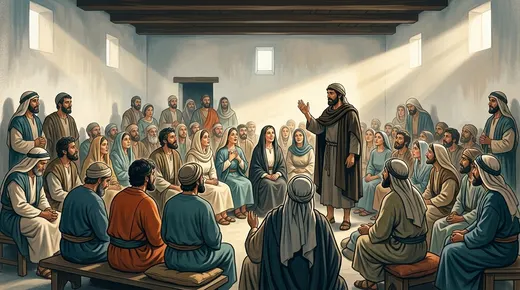 Both put the Spirit's coming at Pentecost, followed by Peter's sermon and a mass baptism; the Urantia Book omits the wind and flames, explains the tongues as languages the apostles knew, and counts over two thousand converts rather than three thousand.Spirit of TruthPentecost (bestowal of Spirit of Truth)Siloam (pool)
Peter, Paul, and the gospel about Jesus
They differThe BiblePeter preached that God had made the crucified Jesus both Lord and Christ. Paul says his gospel came by revelation of Jesus Christ and that he resolved to know nothing but Christ crucified, and he carried it to the Greeks at Athens.
“the gospel which was preached of me is not after man.” Ga 1:11
Read: Acts 2:36; Ga 1:11-12; 1 Co 2:2; Acts 17:22-31
The Urantia BookAt Pentecost Peter unintentionally began preaching facts about the risen Christ in place of Jesus' own gospel of the fatherhood of God and brotherhood of man. Paul turned this into Christianity, built on his own experience, and most of the New Testament is about Paul's religion, not Jesus' life.
“Christianity is founded almost exclusively on the personal religious experience of the Apostle Paul.” 196:2.1
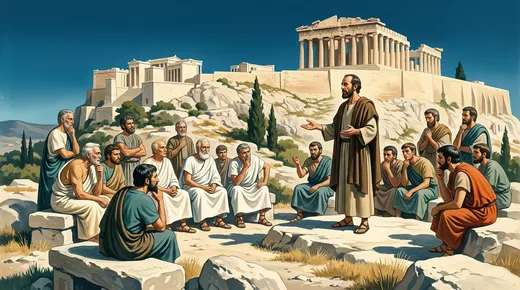 The New Testament presents the apostles' preaching about Christ as the gospel itself; the Urantia Book calls it a well-meant substitution of a religion about Jesus for the religion of Jesus.PaulChristianityPeterAreopagus